Kirkland Limewash Painting · Services

Interior Limewash Walls and Ceilings in Kirkland, WA

Kirkland Limewash Painting offers hand-brushed limewash for the rooms of Kirkland, Washington homes, walls and ceilings alike, as a matte, mineral alternative to standard interior paint, on anything from one wall to a full floor. Where flat paint reads as one even color, limewash carries a gentle tonal drift that changes as daylight moves through the room.

The trade-off against paint is preparation: painted drywall first needs the primer system the chosen limewash specifies, then two or more coats to build depth. Interior work is offered in Kirkland as well as Redmond, Kenmore, Woodinville, Bothell, Yarrow Point and Lake Forest Park.

Request an interior quote

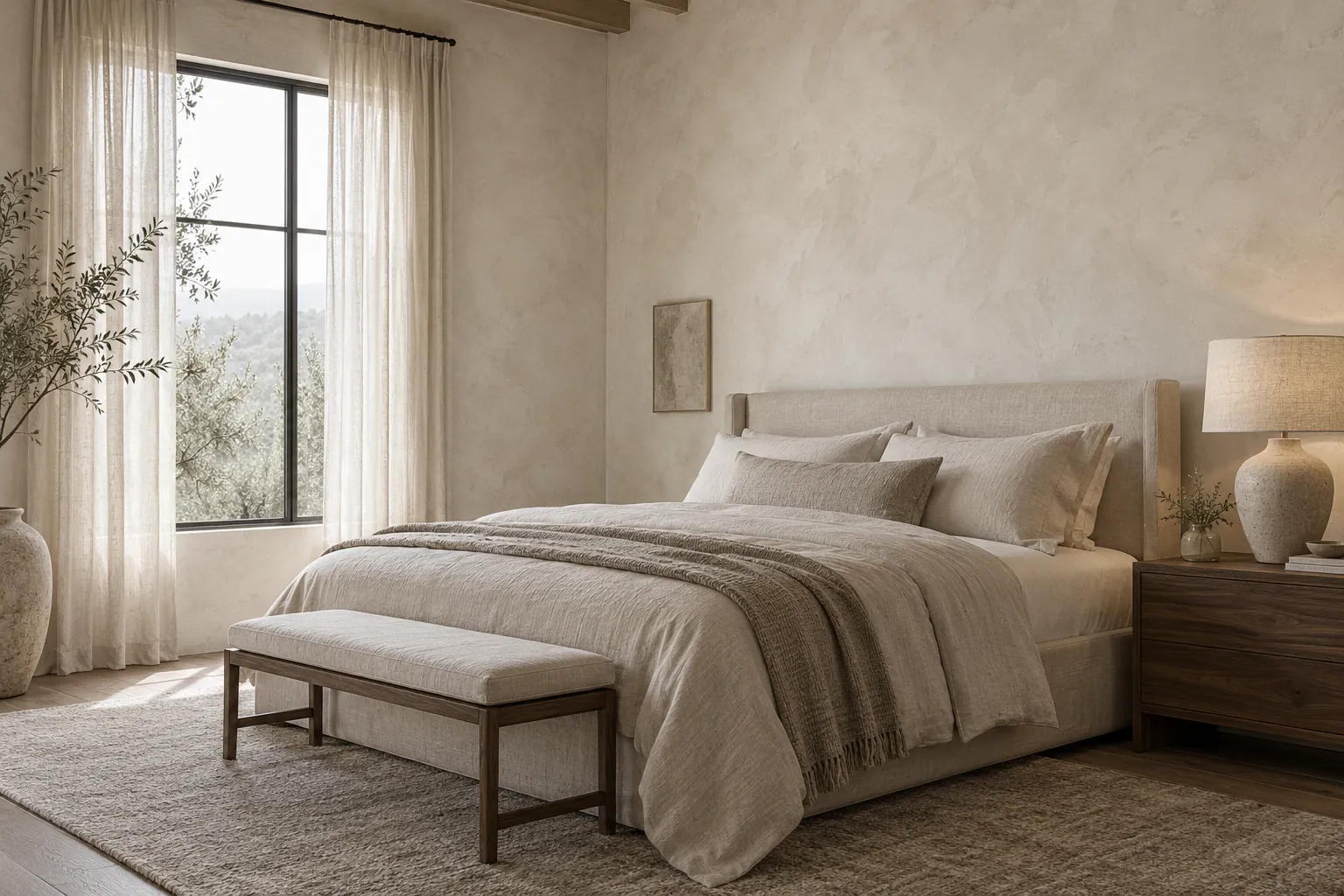
Bedroom with all walls in soft putty-white limewash

Interior limewash options

Living rooms and bedrooms

In rooms where walls are mostly looked at rather than touched, limewash has the edge over paint for atmosphere: a whole room in it feels calm and enclosing. Pale whites and greiges keep a space bright through gray months; clay and mushroom shades bring a large room in closer.

Accent and feature walls

An accent wall in a contrasting paint color changes the hue; an accent wall in limewash changes the texture too, without committing the whole room. Where it stops matters more than with paint: a corner, a run of trim or a step in the wall gives a natural finishing line, whereas a taped edge mid-plane looks accidental.

Ceilings and color-drenched rooms

Color drenching is often done in paint; doing it in limewash, with the ceiling matched to the walls or kept one shade lighter, gives the room a single mineral skin. Overhead coats are slower and need masking around beams, light fittings and crown molding, which makes the approach best suited to dining rooms, studies and bedrooms where the ceiling matters to the design.

Stair halls and double-height walls

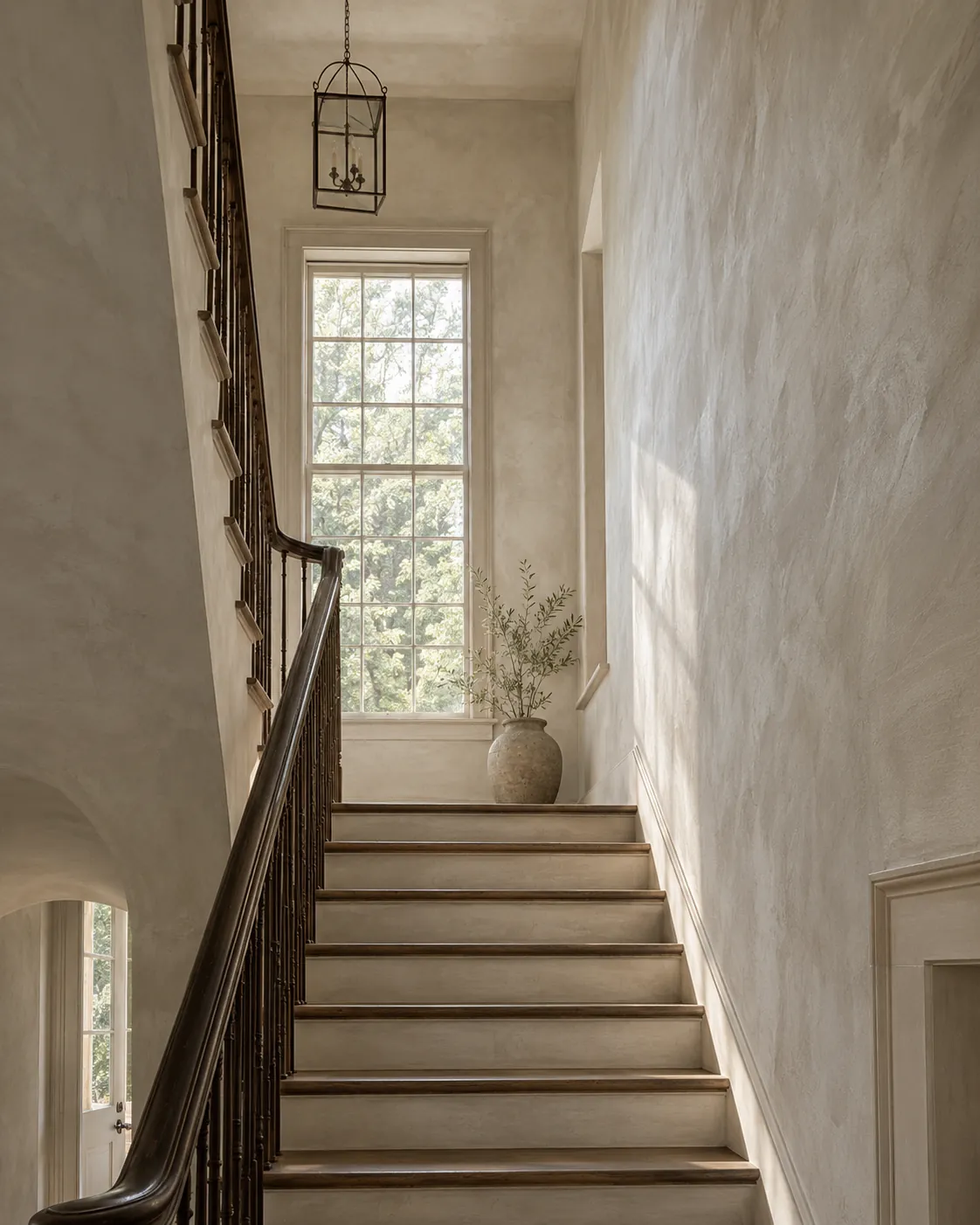
A rolled paint finish hides laps easily; brushed limewash does not, and nowhere is that harder than on a tall entry or stairwell. The reward is that hand texture looks its best on these big surfaces. Each wall has to be finished in one pass from access staging or scaffold, with enough people to stop a drying edge landing mid-wall.

Kitchens, bathrooms and powder rooms

Against tile or a scrubbable kitchen paint, limewash wins on texture and breathability and loses on cleaning. It suits range-hood surrounds, kitchen walls and powder rooms and copes well with steam, but not the inside of a shower. Behind sinks, tubs and cooktops, tile, stone, glass or a manufacturer-approved protective coat is still the right answer.

Textured and orange-peel drywall

Paint flattens orange-peel and light knockdown texture visually; limewash does the opposite, catching in the texture for a more rustic look than a smooth Level 5 wall gives. If a plaster-smooth result is the goal, skim-coating before priming is one route.

Tall stair hall with oatmeal limewash walls and a dark handrail

Preparing painted walls and drywall for limewash

Paint will stick to bare drywall paper or old latex; limewash will not, because it bonds by soaking into porous mineral material. That is why walls receive the primer system the specific product names. Fresh board generally gets two stages, a drywall primer under a mineral or bonding coat; walls with intact paint frequently skip straight to the bridging layer. Tinting that primer toward the topcoat shade is worth considering, since any thin patch would otherwise show stark white.

The checks before priming are the same ones a careful repaint needs, only less forgiving. Walls are degreased and dusted, damage is patched and sanded smooth, and old paint is checked to confirm it is still firmly bonded. Glossy enamel may need sanding, and peeling or powdery paint must be removed or consolidated, because the limewash can be no sounder than the layer beneath. A few limewash lines are made solely for unpainted masonry; on drywall, a different product is needed.
Choosing the finish and coat strategy

Soft wash

Least like paint. Sparse, uneven coverage lets the undercoat glimmer through, so the wall looks airy and a little time-worn.

Layered depth

Good for complete rooms. Stroke direction changes from coat to coat, which reads as cloud at arm’s length and as calm color from the doorway.

Deep tones

Saturated clay, chocolate or olive is harder in lime than in paint: drying lightens it markedly, so expect extra coats and more careful trials.

Request an interior limewash quote

Moving one or more rooms off paint? Name them, say whether each is board, plaster or masonry, mention any ceiling or stairwell, and give the location.

Phone coming soon